
Orange County e-bike liability claims are getting more complicated in 2026. Many crashes no longer involve simple low-speed electric bicycles. Some involve high-powered devices that look like e-bikes but move more like mopeds or electric motorcycles. When a rider, pedestrian, cyclist, or driver gets hurt, the case may raise questions about the seller, manufacturer, online listing, warning labels, speed settings, and product design.
This topic matters because many buyers do not understand the difference between a legal e-bike and an electric motorcycle. Parents may buy a device for a teenager because the listing calls it an e-bike. A rider may assume the device belongs in a bike lane. A pedestrian may never expect a two-wheeled device to move at motorcycle-like speed on a sidewalk, trail, or near a school.
After a serious crash, the legal question may go beyond rider error. The claim may ask whether a retailer sold a non-compliant device, whether the listing hid important speed information, whether the product carried the required label, whether someone modified the device, and whether the seller gave clear warnings.
This article is for educational purposes only and is not legal advice. Every claim depends on the crash facts, injuries, product records, insurance coverage, and legal deadlines.
Why High-Speed E-Bike Product Claims Are Getting Attention
California law separates legal e-bikes from faster electric devices. That distinction can affect crash claims. A true e-bike should fit within one of the legal classes. Some devices exceed those limits. Others may lack working pedals, use higher-powered motors, or allow throttle speeds that push them outside the ordinary e-bike category.
The California Attorney General issued a 2026 consumer alert that says two-wheeled vehicles exceeding certain speed or power limits may qualify as mopeds or motorcycles instead of e-bikes. The alert also warns sellers not to market vehicles as e-bikes if they do not fit the legal classes. Readers can review the official alert here: California DOJ e-bike safety and legal requirements alert.
That warning matters in Orange County because e-bikes and e-motorcycles appear near schools, beach paths, parks, shopping centers, neighborhoods, and busy streets. A high-speed device can cause severe injuries when a rider loses control or hits a pedestrian, cyclist, or vehicle.
Illegal marketing can affect the liability analysis
A seller’s words matter. If a retailer advertises a high-powered vehicle as a normal e-bike, the buyer may misunderstand the legal and safety risk. The listing may show speed, range, battery capacity, throttle mode, or off-road features. Those details can help prove what the seller knew or promoted.
This does not mean every seller automatically caused the crash. Product liability depends on evidence. However, a claim may review whether the seller misrepresented the device, ignored California limits, sold unlock kits, promoted illegal speed settings, or failed to warn buyers about licensing, registration, helmet, or age issues.
This topic connects with your existing article on Orange County Modified E-Bike Accident Claims in 2026. That post focuses on modified devices. This guide focuses more on sellers, labels, advertising, and product records.
Save the product listing before it changes
Online listings can disappear fast. A seller may edit the speed, wattage, age warnings, product title, or disclaimer after a crash. Save screenshots of the listing, checkout page, receipt, product description, reviews, Q&A section, warranty page, and any speed claims.
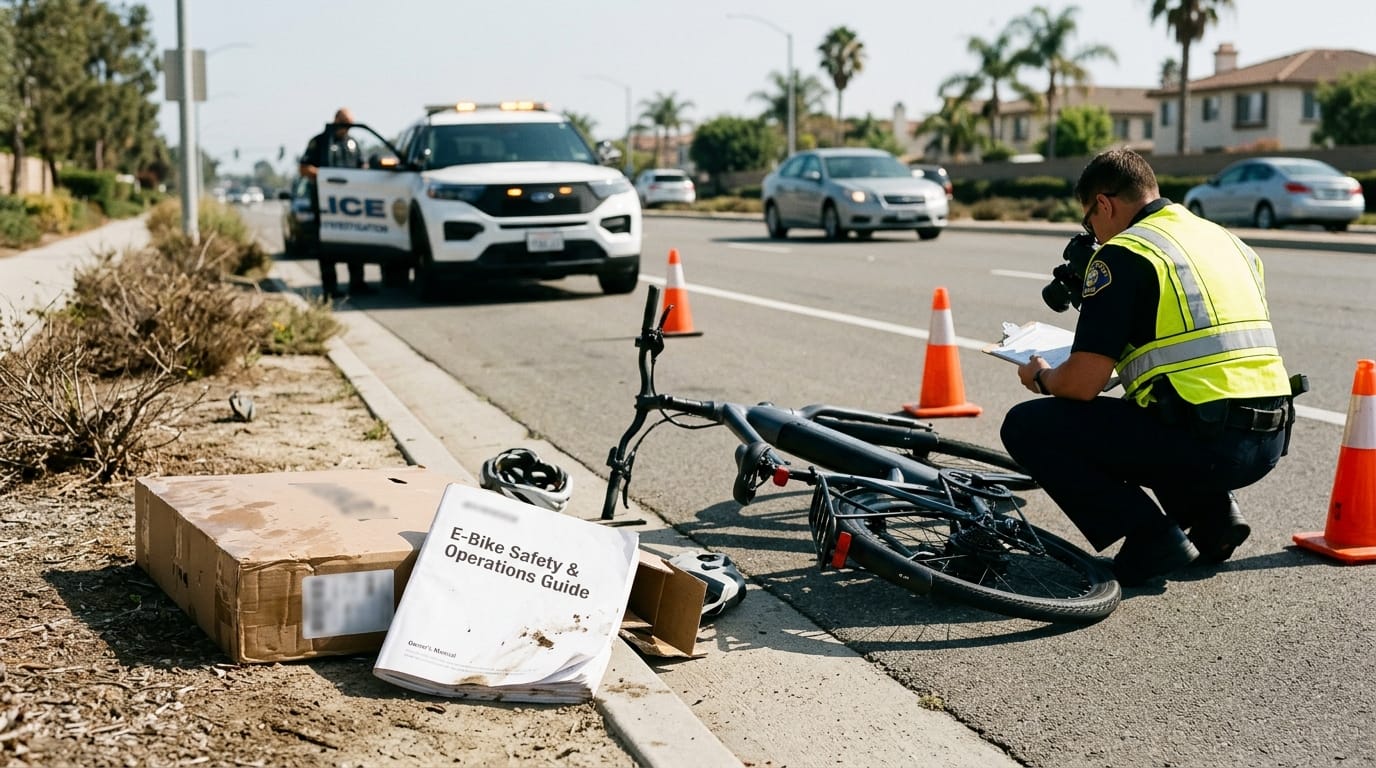
Also save the box, manual, charger, battery label, frame label, controller information, and warning stickers. Those details may show whether the device matched what the seller promised. They may also show whether the product carried the classification label required for California e-bikes.
Look for unlock kits, speed modes, and app settings
Some devices include hidden speed modes, app controls, controller settings, or aftermarket parts. Others come with instructions that help users unlock higher speeds. These facts can change the claim. A seller who promotes easy illegal upgrades may face different questions than a seller who clearly warns against them.
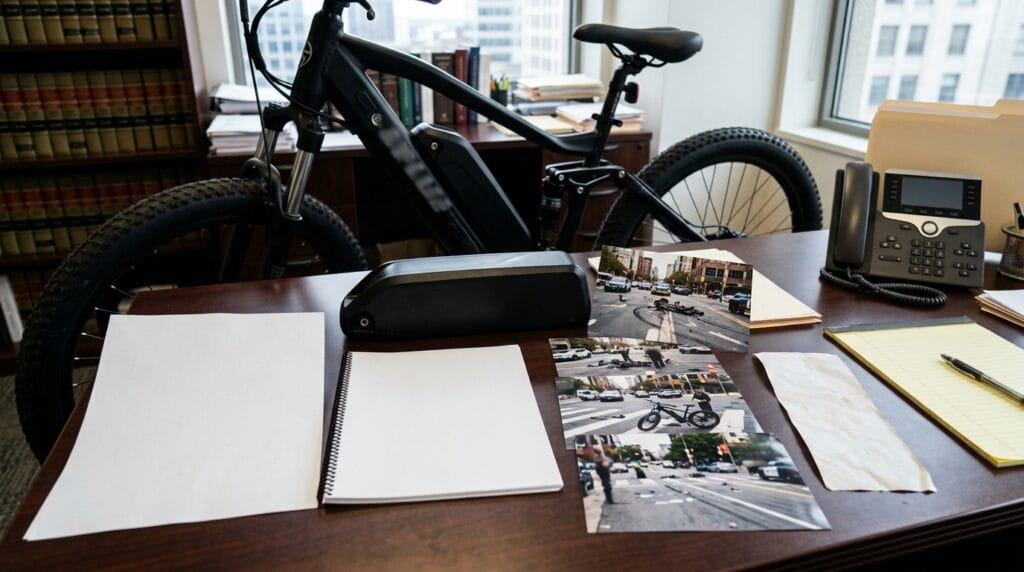
Preserve the device exactly as it looked after the crash. Do not repair it. Do not reset the app. Don’t swap batteries. Don’t remove parts. A product expert may need to inspect the motor, controller, display, brakes, tires, throttle, pedals, battery, and software settings.
Retailer responsibility may overlap with rider and parent responsibility
Several people may share responsibility after a high-speed electric device crash. The rider may have operated too fast. A parent may have allowed a minor to use an unsafe device. A driver may have failed to yield. A seller may have marketed an illegal device as an e-bike. A repair shop may have installed unsafe parts.
California comparative fault can divide responsibility based on facts. The rider’s mistake does not always erase the seller’s conduct. The seller’s conduct does not always erase the rider’s conduct. A careful investigation should review all possible causes instead of accepting the first blame story from an insurance company.
For more background on pedestrian injury risks, read Orange County E-Motorcycle Pedestrian Injury Claims in 2026. That post explains why high-powered electric devices can create serious danger for people walking near sidewalks, schools, and crosswalks.
Parents should not rely only on the product name
A product title can mislead buyers. A device may use the word “bike” but still function like a motorcycle. Parents should check the motor wattage, throttle speed, assisted speed, age guidance, pedals, helmet rules, and local riding restrictions before allowing a child to ride.
After a crash, investigators may ask who bought the device, who assembled it, who charged it, who stored it, who unlocked it, and who allowed the rider to use it. Those facts can affect insurance coverage and settlement pressure.
How Victims Can Protect an Orange County E-Bike Liability Claim
The first step after a serious crash is medical care. High-speed electric device crashes can cause fractures, head injuries, dental trauma, spinal injuries, road rash, internal injuries, and emotional distress. Get checked quickly, even if pain feels manageable at first.
Next, preserve evidence. Take photos of the device, scene, injuries, helmet, clothing, road marks, crosswalks, signs, bike lanes, debris, and lighting. Get witness names. Look for cameras from homes, schools, stores, vehicles, buses, parking lots, and traffic systems. Ask about footage before it gets deleted.
Do not let anyone repair or discard the device too soon. The product itself may become the strongest evidence in the case. Its condition can show speed capability, braking issues, modification signs, battery problems, warning labels, and whether the vehicle matched the seller’s description.
Evidence checklist for seller, product, and injury disputes
A strong Orange County e-bike liability claim should include three categories of evidence: product evidence, crash evidence, and medical evidence. Product evidence includes the receipt, online listing, manual, labels, packaging, emails, ads, app records, warranty documents, and seller messages.
Crash evidence includes photos, video, police reports, witness statements, damage patterns, GPS data, speed estimates, scene measurements, and road conditions. Medical evidence includes emergency records, imaging, diagnosis notes, specialist reports, therapy records, bills, prescriptions, work restrictions, and recovery notes.
Your site’s guide on Juvenile E-Bike Accidents in Orange County is a useful internal link when the injured person or rider is a minor. It helps readers understand how age, supervision, school routes, and parent responsibility may affect a claim.
Do not let the insurer narrow the case too early
Insurance companies often want a simple story. They may blame the rider, the driver, the parent, or the pedestrian without reviewing product evidence. That can hurt the claim. A high-speed e-bike case may involve several responsible parties and several insurance policies.
Do not guess about speed, classification, product legality, or fault during early insurance calls. Say what you know. Avoid filling gaps with assumptions. Save records first, then review the evidence before giving detailed statements.
This issue also connects with Orange County Delivery Driver Accident Claims in 2026. Both topics show the same trend: modern injury claims often depend on app data, product records, route information, video, and fast evidence preservation.

Orange County e-bike liability cases can involve more than one careless rider. They may involve illegal marketing, missing warnings, unsafe modifications, product defects, parent supervision, driver negligence, and insurance disputes. That makes evidence collection critical.
If a high-speed electric device caused your injury, act quickly. Get medical care. Preserve the device. Save the product listing. Keep receipts and labels. Look for video. Document your injuries. Then review every possible source of fault before accepting blame or agreeing to a quick settlement.