An Orange County delivery driver accident claim can be more complicated than a normal car crash. At first, the case may look simple. A delivery driver hit another vehicle, pedestrian, cyclist, or scooter rider. However, the real questions often go deeper. Was the driver using a delivery app? Was the driver rushing to complete an order? Was the vehicle personally owned or company-owned? Was the driver working as an employee, contractor, or gig worker?
These questions matter in 2026 because delivery services are everywhere. Food delivery, grocery delivery, pharmacy delivery, package delivery, and same-day retail delivery all place more vehicles on Orange County roads. Drivers may move quickly between restaurants, apartment complexes, shopping centers, schools, hotels, office parks, and residential neighborhoods.
As a result, a delivery crash may involve app evidence, phone records, commercial insurance, employer control, route pressure, and disputes over who is responsible. The driver may blame traffic. The company may deny control. The insurer may argue the driver was not working at the exact time of the crash. Because of that, evidence becomes very important.
This article is for educational purposes only. It is not legal advice. Still, it can help injured people understand how an Orange County delivery driver accident claim may be investigated, what proof may matter, and why quick action can protect a case.
Why Delivery Driver Accident Claims Are Different in Orange County
Delivery driver crashes are different because the driver may not be acting only as a private motorist. The driver may be completing an order, following app instructions, picking up food, dropping off groceries, or transporting packages. Therefore, the crash may involve both ordinary negligence and business-related activity.
This can affect fault and insurance. A regular driver usually has personal auto insurance. A delivery driver may also involve platform coverage, employer coverage, commercial coverage, or a dispute about whether any business policy applies. That makes the claim harder to resolve without careful investigation.
Distraction is another major issue. Delivery drivers often rely on phones for navigation, order acceptance, pickup instructions, customer messages, delivery confirmation, and route changes. NHTSA reports that distracted driving remains a serious national safety problem, with 3,208 deaths in distraction-involved crashes in 2024. Also, California’s Office of Traffic Safety explains that drivers cannot hold a cell phone or similar electronic device while driving.
That is why an Orange County delivery driver accident claim should not be treated like a simple fender bender. The phone, the app, the route, and the driver’s work status may all matter.
App distraction can become a key liability issue
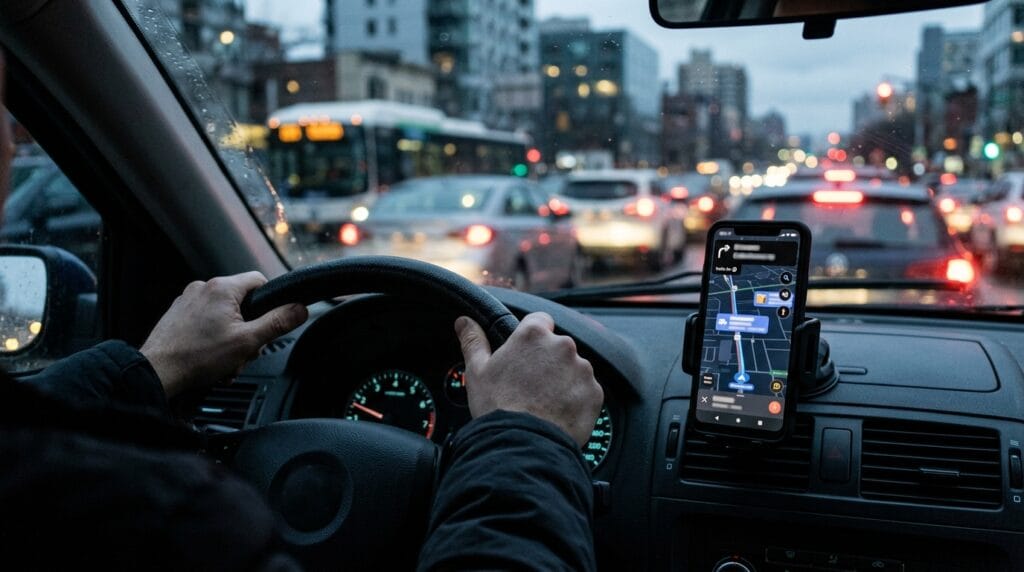
App distraction is often central in delivery crash cases. A driver may say they were looking at the road. However, the evidence may show they were accepting an order, checking a pickup time, reading drop-off notes, following GPS, or communicating with a customer.
Even a short glance can matter. A few seconds of inattention can cause a driver to miss stopped traffic, a red light, a pedestrian in a crosswalk, a cyclist in a bike lane, or a car braking ahead. In busy Orange County areas, that delay can be enough to cause serious injury.
This issue connects closely with your site’s existing guide on Orange County distracted driving accident claims in 2026. That article explains why phone evidence, app records, and screen activity can help prove fault.
Phone records, app logs, and route data may matter
Several types of digital evidence may help a delivery crash claim. Phone records may show calls, messages, or data activity near the time of the collision. App logs may show whether the driver was logged in, accepting orders, navigating, picking up food, or completing a delivery.
Route data may also matter. It can show where the driver was going, how fast they needed to move, and whether the crash happened during an active order. In some cases, GPS data, dashcam video, store records, and customer messages can help build a timeline.
However, digital evidence can disappear. Apps may retain records for limited periods. Businesses may overwrite camera footage. Drivers may delete messages. Therefore, injured people should move quickly to preserve evidence.
Insurance coverage can become disputed
Insurance is often one of the hardest parts of a delivery driver claim. A personal auto insurer may deny coverage if the driver was using the car for delivery work. Meanwhile, a platform or company may argue its policy does not apply because the driver was not on an active delivery.
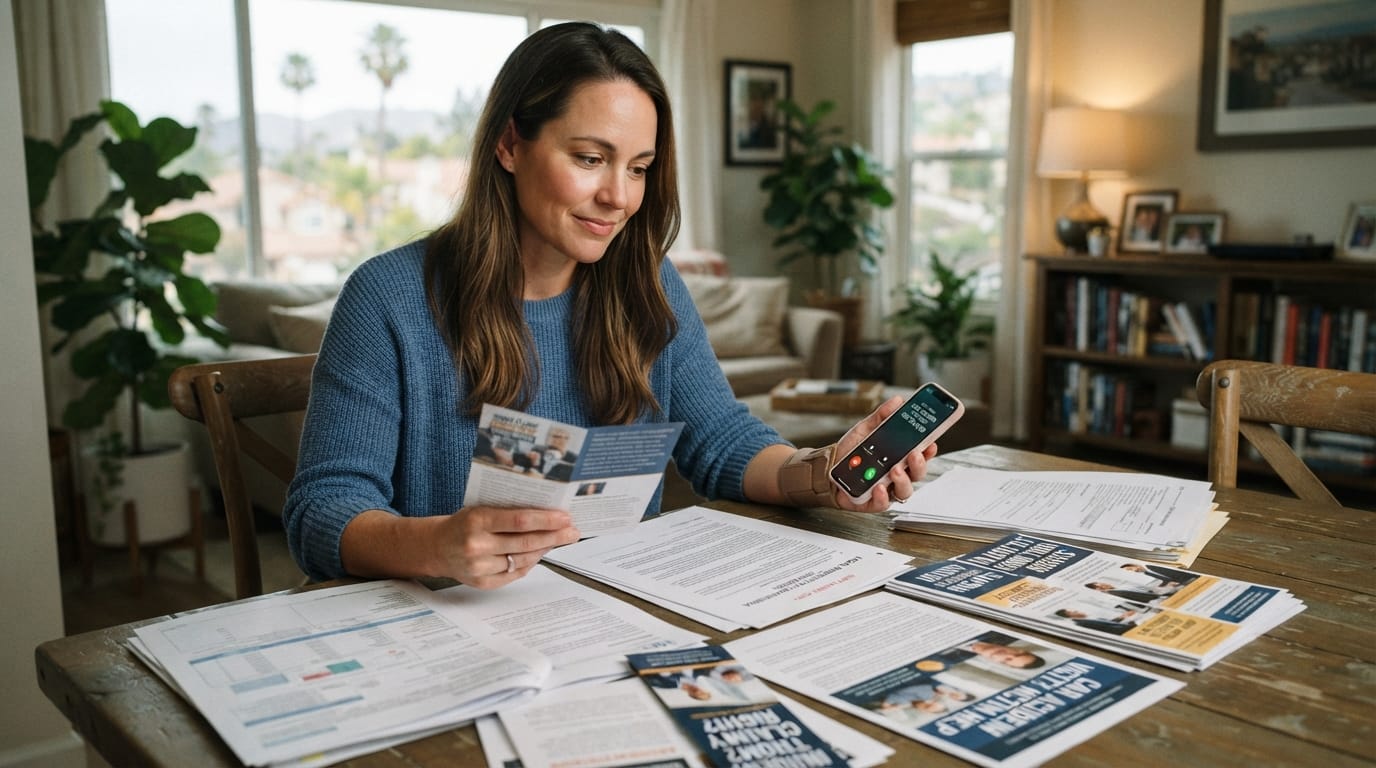
This creates a gap that can delay payment. The injured person may face medical bills, lost income, vehicle damage, and pain while insurance companies argue over responsibility. Because of that, it is important to identify the driver’s status at the exact time of the crash.
Was the driver logged into the app? Had they accepted an order? Were they heading to a pickup? Were they delivering food or packages? Had the delivery already ended? Those details may affect which policy applies.
Delivery pressure can create unsafe driving choices
Delivery work can create pressure. Some drivers feel pushed to complete more orders, avoid late deliveries, find difficult addresses, or respond quickly to app notifications. In crowded areas, that pressure can lead to unsafe choices.
A driver may stop suddenly near a restaurant. They may double park. They may block a bike lane. They may turn quickly into an apartment complex. They may back up without checking. They may also speed through a neighborhood to save time.
None of those choices should be ignored. A delivery driver still has a duty to use reasonable care. Work pressure does not excuse unsafe driving. If route pressure or app activity contributed to the crash, that evidence may support the injured person’s claim.
Pedestrians, cyclists, and scooter riders face higher risk
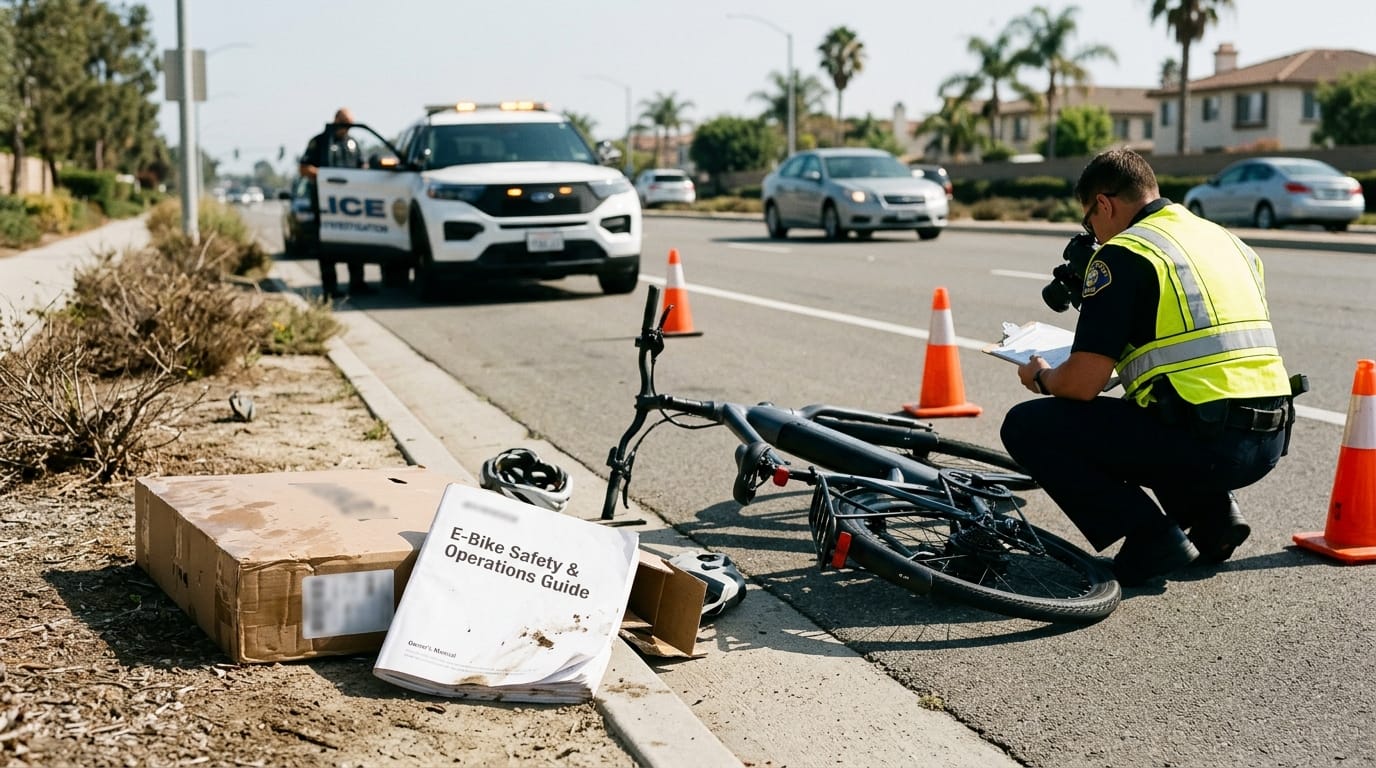
Delivery crashes can be especially dangerous for people outside vehicles. Pedestrians, cyclists, and scooter riders have little protection when a driver turns too fast, opens a door suddenly, blocks a bike lane, or fails to yield at a crosswalk.
This is important in shopping centers, school zones, apartment complexes, beach communities, and downtown areas. In those places, delivery drivers may be focused on finding a pickup or drop-off location instead of scanning for people nearby.
If the crash involved a pedestrian or crosswalk, read your site’s guide on pedestrian accidents in Orange County and California’s daylighting law. Visibility, parking, crosswalk design, and driver attention may all affect fault.
How to Protect an Orange County Delivery Driver Accident Claim
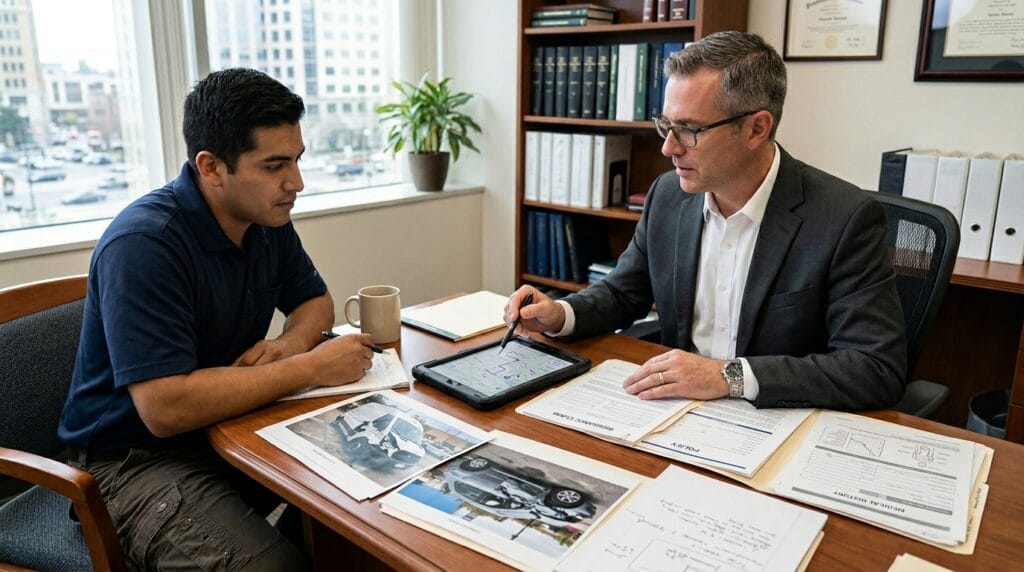
After a delivery driver crash, medical care comes first. Some injuries are obvious right away. Others become worse over several hours or days. Neck pain, back pain, headaches, dizziness, numbness, shoulder pain, knee injuries, and anxiety symptoms should be documented early.
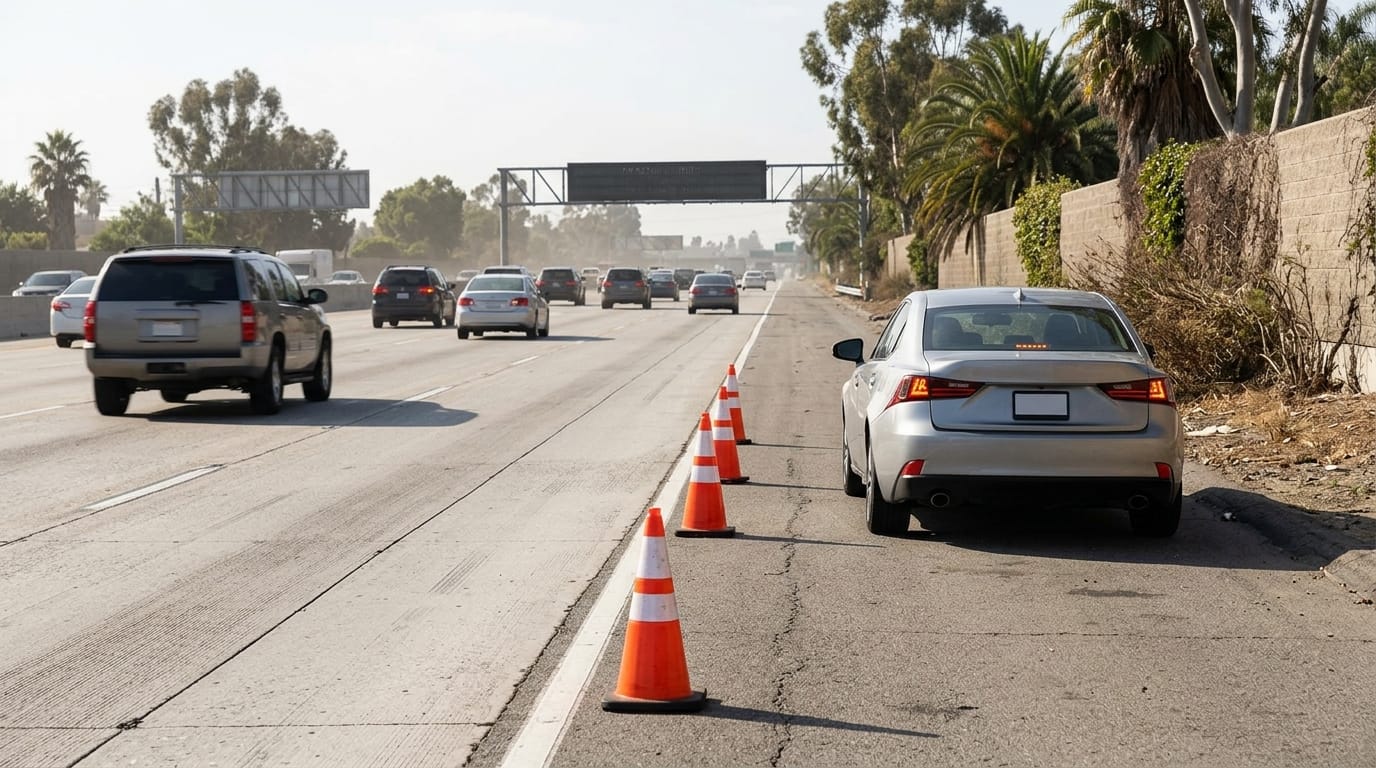
Next, collect evidence if it is safe. Take photos of the vehicles, license plates, delivery bags, company logos, app screens if visible, food or package labels, street signs, skid marks, traffic signals, and nearby cameras. Also note the restaurant, store, apartment complex, or delivery destination if known.
Get the driver’s name, license, insurance information, vehicle owner details, and any company or platform information. If the driver says they were working, write that down. If they deny working but delivery items are visible, photograph them.
For broader claim steps, read how to file a personal injury claim in Orange County. That guide can help injured people understand the basic claim process after medical care begins.
Strong claims connect crash evidence with medical proof
A strong delivery driver accident claim needs two main types of proof. First, it needs liability evidence. This shows why the crash happened and who may be responsible. Second, it needs medical evidence. This shows what injuries the crash caused and how those injuries affected the victim.
Liability evidence may include app records, phone data, dashcam footage, witness statements, police reports, photos, vehicle damage, and business surveillance video. Medical evidence may include emergency care records, imaging, treatment notes, physical therapy records, work restrictions, pain logs, and future care recommendations.
Do not separate these two parts. Insurance companies often attack both. They may argue the driver was not at fault. They may also argue the injuries were minor or unrelated. Good documentation helps answer both arguments.
Some cases may also involve newer vehicle technology. Delivery vehicles may have cameras, GPS systems, driver monitoring, or connected-car data. For a related technology issue, read California robotaxi injury claims in 2026. The facts are different, but both topics show how modern crash claims often depend on digital evidence.
Do not wait on deadlines, symptoms, or emotional harm
Timing matters. Camera footage can be overwritten. App data may become harder to obtain. Witnesses may forget details. Also, California personal injury claims have deadlines that should be reviewed early.
Symptoms also need attention. If pain, anxiety, sleep problems, driving fear, or emotional distress develops after the crash, document it. Serious crashes can affect more than bones and muscles. For related reading, see emotional distress and mental health damages in Orange County personal injury cases.
In the end, an Orange County delivery driver accident claim is not only about the impact. It may involve app distraction, delivery pressure, insurance gaps, business records, phone data, and medical proof. The sooner these facts are preserved, the stronger the claim can become.
If you were injured in a delivery driver crash, do not rely only on the driver’s explanation. Get medical care. Photograph the scene. Identify the delivery platform or company. Save witness information. Then review the evidence before making broad statements to an insurer. In 2026, delivery accident claims are modern evidence cases, and modern evidence can disappear fast.</p ::contentReference[oaicite:1]{index=1} >