California robotaxi injury claims are no longer a niche legal topic. In 2026, self-driving ride services, app-based transportation platforms, and autonomous vehicle regulation are moving fast enough that injury victims can no longer treat these crashes like ordinary Uber or Lyft accidents. The vehicle may not have a human driver in control. The rides may be booked through an app. The key evidence may include fleet data, sensor logs, camera footage, trip records, and software status information that an ordinary crash claim never involves.
That is why California robotaxi injury claims deserve their own discussion. If an Orange County resident is injured while riding in a robotaxi, hit by one while visiting another California city, or involved in a collision with a rideshare vehicle that uses some level of automated driving technology, the legal questions can become complicated very quickly. Fault may involve a fleet operator, a remote operations system, a software issue, a human safety operator, another driver, or a combination of several factors at once.
This topic also matters because the public rollout is no longer theoretical. More riders are using autonomous ride-hailing services, more companies are expanding, and California regulators are still refining the rules that govern testing, deployment, reporting, and oversight. That means injured people need to think beyond the usual exchange-of-insurance-info approach and start preserving digital evidence immediately.
If you have already read our posts on How AI Evidence and Smart Devices Are Transforming Personal Injury Cases in Orange County and Higher California Auto Insurance Minimums in 2025: What Orange County Drivers Need to Know, this article builds on that foundation by focusing on autonomous rides, layered liability, and what victims should do differently in 2026.
Why California Robotaxi Injury Claims Matter More in 2026
California robotaxi injury claims matter more now because the legal and factual issues have become more layered than in a normal rideshare crash. In a traditional Uber or Lyft case, lawyers usually begin with familiar questions. Who was driving? Was the driver logged into the app? Which insurance layer applies? Was the driver on the way to a pickup, carrying a passenger, or waiting for a ride request? Those questions still matter in human-driven rideshare cases, but robotaxi cases add several more.
Now the analysis may include whether the autonomous system was engaged, what the vehicle perceived before impact, whether a remote operator had any role, whether a fleet company preserved its data correctly, and whether the event was part of a larger operational problem. Those details can make a major difference in how fault is assigned and how hard a company fights to keep evidence out of reach.
How the claim is different from a normal Uber or Lyft crash
The biggest difference is that the most important witness may be data. A robotaxi may generate information about route selection, braking, object detection, speed changes, camera feeds, trip timing, and software behavior in the seconds leading up to a collision. In a human-driven rideshare crash, you often focus on phone use, distraction, traffic violations, and eyewitness testimony. In a robotaxi case, those still matter, but they may sit beside system logs and proprietary fleet records that require fast legal action to preserve.
Why app data and system evidence matter so much
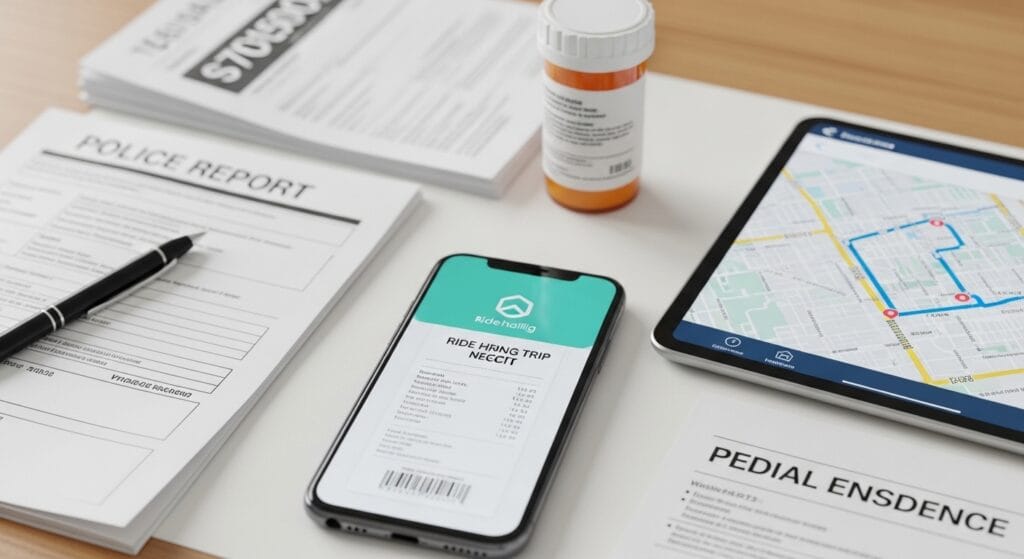
Victims should assume that app screenshots, trip confirmations, pickup and drop-off details, timestamps, location history, and any customer support messages may become important. If the injured person was a passenger, they should preserve every detail from the app account used for the ride. If they were outside the vehicle, they should still document license plate information, company branding, surrounding traffic, nearby surveillance cameras, and anything visible about the vehicle’s operating state. In many California robotaxi injury claims, evidence disappears faster than people expect.
Why insurance analysis can be harder than people think
Many people assume a robotaxi case is easier because a company likely has more money than an individual driver. That assumption can be dangerous. A better-funded defendant usually means a more aggressive defense. It also means the company may point to another vehicle, roadway condition, pedestrian action, cyclist movement, or software interpretation issue to reduce exposure. Even when substantial insurance exists, the claim can still turn into a hard fight over causation, control, and comparative fault.
How Liability and Compensation Work in Robotaxi Injury Cases
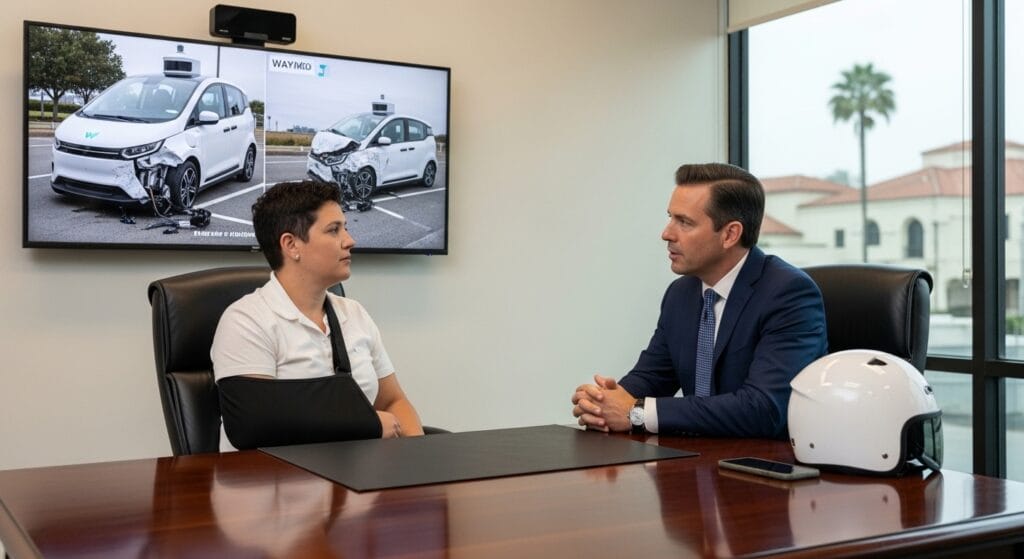
Liability in robotaxi cases often starts with the same negligence framework used in other injury claims, but the number of potentially responsible parties is usually larger. A fleet operator may be responsible. A manufacturer may be involved. A remote support system may matter. Another driver may still be the primary cause. A city or public entity may become relevant if roadway design, lane markings, signal timing, or visibility contributed to the crash. The legal job is not to guess early. It is to identify every party whose conduct may have caused or worsened the injury.
That is why a weak early investigation can wreck an otherwise strong case. If the defense controls the timeline, the company may define the event before the victim ever sees the critical evidence. By the time the injured person realizes the case is more technical than expected, the operator may already have built a clean public narrative around what happened.
Who may be responsible after a robotaxi crash
In some cases, the answer is straightforward. Another human driver runs a red light, strikes the autonomous vehicle, and injures the passenger. In that situation, the robotaxi may be part of the event but not the main wrongdoer. In other cases, the autonomous vehicle itself may brake unexpectedly, fail to react properly, stop in an unsafe position, or misread a roadway condition. Then the claim may shift toward the company operating the service, the system behind it, or the parties responsible for deployment and maintenance.
There can also be mixed-fault scenarios. A human driver may have been negligent, but the robotaxi may have responded badly. A pedestrian may have crossed outside a crosswalk, but the vehicle’s system may still be accused of failing to slow in time. California comparative fault rules can make these cases messy, especially when each side uses technology to support its own version of events.
What evidence should be preserved right away
Preserve the app ride receipt, screenshots, route details, customer-service messages, injury photos, emergency treatment records, names of witnesses, and any police or incident number. If there are bystanders, nearby businesses, or traffic cameras, try to identify them quickly. If your site wants to connect this article to a broader post-accident guide, this is a natural place to link to Understanding Your Rights After a Car Accident in Orange County and How to File a Personal Injury Claim in Orange County: A Step-by-Step Guide.
What damages may be available to an injured victim
As with other major injury cases, damages may include emergency medical care, hospital bills, surgery, rehabilitation, lost wages, reduced earning capacity, future medical costs, and pain and suffering. A serious autonomous vehicle crash may also lead to emotional distress, anxiety about transportation, and lasting fear around technology-based travel. Those harms should not be brushed aside just because the crash involves software and sensors instead of a visibly reckless human driver.
For Orange County victims, the practical reality is simple: these claims need to be built carefully and early. The more sophisticated the defendant, the more important documentation becomes. Waiting too long can make it much harder to obtain the records, trip evidence, and system details needed to show what really happened.
Why this topic fits your site right now
This article fits your site because it connects your existing Orange County injury content to a current legal trend without drifting away from your audience. It pairs naturally with your technology-evidence content, your insurance coverage article, and your broader accident-rights guides. It also gives you a timely legal-updates piece that can attract search traffic from readers trying to understand what changes when a crash involves autonomous transportation rather than a standard car.
The bottom line is clear. California robotaxi injury claims are different because the evidence is different, the liability picture is broader, and the defense strategy is usually more technical from day one. Anyone injured in one of these cases should treat it like a serious evidence-preservation matter immediately, not just another app-based transportation accident.
For official background on California’s autonomous vehicle oversight, readers can review the California DMV autonomous vehicles page.