Not every serious injury claim begins with a moving vehicle. Some start in a garage, hallway, bedroom, or charging corner when a lithium-ion battery overheats and turns an ordinary moment into a fire emergency. That is why a lithium battery fire injury Orange County case may become a personal injury or product liability claim instead of just a property-loss dispute.
This topic is highly relevant in 2026. California’s new safety rules for e-bikes and powered mobility devices now require stronger battery and electrical certification standards. At the same time, recent California reporting has highlighted how dangerous these fires can be. This week, a faulty e-bike battery reportedly started a fatal apartment fire in San Jose. Officials warned that lithium-ion battery fires spread fast, create thick toxic smoke, and can become deadly within seconds.
Many people hear about these incidents and assume they were just bad luck. Sometimes they were not. A battery fire may involve a defective battery pack, a dangerous charger, poor product design, missing warnings, counterfeit parts, unsafe modifications, or negligent handling by a rental or fleet company. When that happens, the legal question changes. The issue is no longer only what caught fire. The issue becomes who created the risk.
Why Battery Fire Injury Cases Are Different From Ordinary Accident Claims
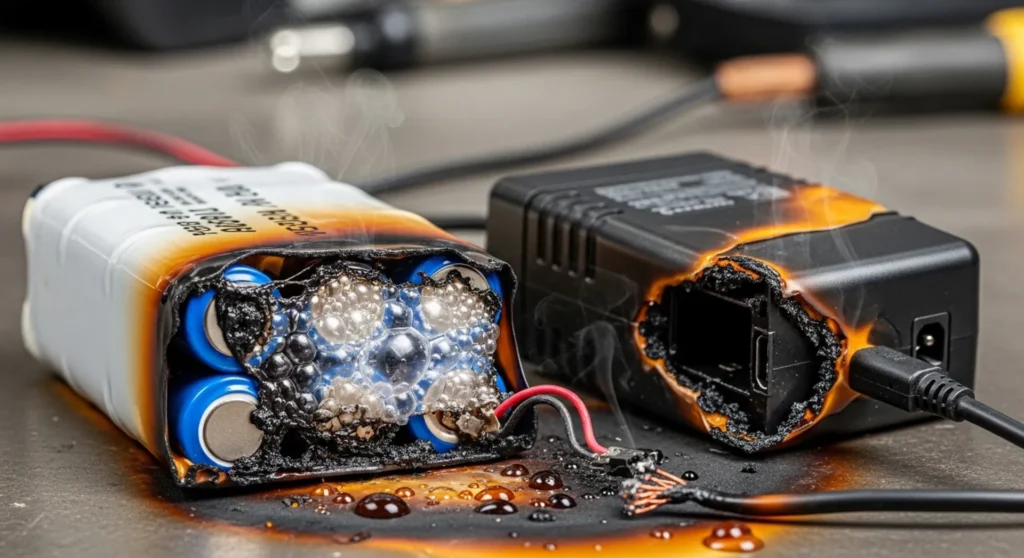
A standard injury case often focuses on careless driving or unsafe property conditions. Battery-fire claims frequently move in a different direction. They often depend on product-liability principles, technical inspection of damaged components, and proof about how the device was designed, assembled, sold, or maintained.
These Claims Often Turn on Product Defects
If a battery ignites during ordinary charging or normal use, the central issue may not be user carelessness. It may be whether the product was unreasonably dangerous. Product-liability cases commonly involve design defects, manufacturing defects, or failure-to-warn theories. That matters because an injured victim may not need to prove the same kind of everyday negligence that applies in a simple crash case.
The battery itself is not always the only problem. The charger, adapter, connector, battery-management system, wiring, or overall device design may also contribute. Some incidents involve incompatible aftermarket chargers. Others involve low-quality products sold online with weak traceability and poor quality control. A serious claim needs investigation, not assumptions.
California’s 2026 E-Bike Safety Rules Make This Even More Important
California’s 2026 public-safety changes included Senate Bill 1271, which focuses on battery and electrical safety standards for electric bicycles, powered mobility devices, and related equipment. Reporting on the law says e-bikes sold or leased in the state now must meet accredited safety certification requirements. That does not automatically prove liability in every battery fire, but it does show the state recognizes battery safety as a real and growing danger.
This is a natural internal-link opportunity with your existing post on juvenile e-bike accidents in Orange County. That article already addresses the 2026 e-bike law changes, so this battery-fire post helps expand the same legal topic cluster from crash liability into product-liability risk.
These Fires Cause More Than Burn Injuries
People usually think first about flames and skin injuries. Lithium-ion fires can cause much more than that. Victims may inhale toxic smoke, suffer lung injury, fall while escaping, experience eye irritation, or face long-term respiratory problems. Recent reporting on the San Jose battery fire emphasized that even trained firefighters treat these incidents as unusually dangerous because the smoke can become life-threatening very quickly. :contentReference[oaicite:10]{index=10}
More Than One Party May Be Legally Responsible
Battery-fire claims often have a broader liability chain than ordinary accidents. Depending on the facts, responsibility may involve the battery manufacturer, device maker, importer, distributor, online seller, charger manufacturer, repair shop, or rental operator. A shared e-bike or e-scooter company may also face scrutiny if it supplied or maintained unsafe equipment.
That is one reason these cases should not be treated like simple household accidents. A small fire scene can still point to a larger product-safety problem. For injured people, that broader liability picture matters because serious injuries often require access to meaningful insurance or corporate defendants to make the claim financially viable.
What Injured People Should Do After a Lithium-Ion Battery Fire
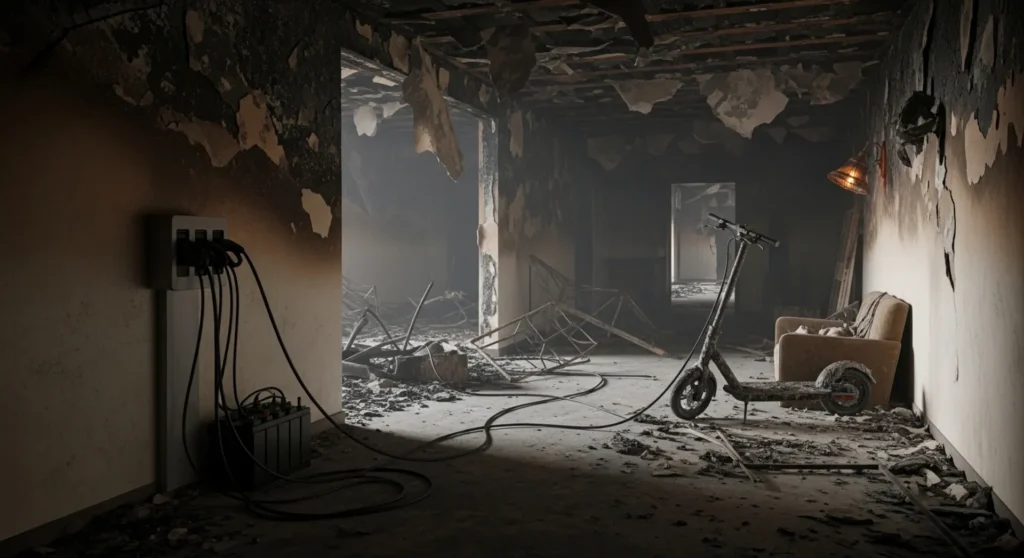
After any battery fire, the first priority is medical care and emergency safety. Once that happens, the next steps matter a lot. These cases can become much harder to prove if the device gets thrown away, the scene gets cleaned too aggressively, or purchase records disappear.
Preserve the Device, Charger, and Purchase Trail
Do not throw away the burned battery, charger, or device if it is safe to preserve them. Those items may become the most important evidence in the case. Photograph the remains, the charging area, burn patterns, smoke damage, outlets, extension cords, and any nearby materials that caught fire.
Keep receipts, packaging, warning labels, online order confirmations, seller information, manuals, and serial numbers. If the device came from a rental platform or app-based service, save screenshots and account records. Product cases often turn on one practical question: can the exact product and chain of sale be identified?
Get Medical Care Even if the Injury Seems Minor at First
Smoke inhalation and burn injuries do not always look severe right away. Breathing problems can worsen later. Burns can deepen over time. Escape injuries may show up hours later after adrenaline wears off. Prompt treatment protects your health and clearly connects the incident to your injury records.
This also pairs well with your existing injury-guidance content. It can link back to e-bike and e-scooter accidents in Orange County, since the same devices that create roadway injury cases can also create product-failure and fire claims.
Be Careful With Early “User Error” Explanations
Manufacturers and insurers often lean on user-error defenses early. Sometimes that explanation is right. Sometimes it is just the fastest available excuse before anyone has reviewed the evidence. A person may have charged the device in an ordinary way and still been injured by a defective battery, unsafe charger, or poor warning system.
The issue is not whether misuse can matter. It can. The issue is whether that explanation is true or simply convenient. Battery-fire cases deserve a real technical investigation.
Why This Topic Fits OrangeCountyPersonalInjuryAttorneys.net Right Now
This is a strong addition to the site because it extends the existing 2026 content into a closely related but still distinct topic area. The blog already covers juvenile e-bike accidents, pedestrian daylighting, and broader personal-injury categories, but it does not appear to have a dedicated article on lithium-battery fire injuries. That makes this post useful for both topical authority and internal linking.
The timing also makes sense. California tightened battery-related safety standards in 2026, and current reporting shows the fire risk is not theoretical. These incidents affect homes, apartments, garages, and charging areas, which means Orange County readers are likely to see this topic as practical and urgent rather than abstract.
The bottom line is simple. A lithium-ion battery fire in Orange County may be more than an unfortunate household event. If a defective product, unsafe charging system, missing warning, or negligent commercial actor played a role, the case may support a real injury claim. Victims should not assume these fires were automatically unavoidable. Sometimes the danger was built into the product from the start.
For authority links, you can point readers to the CHP’s 2026 public-safety law summary and current California reporting on lithium-ion battery fire risks and e-bike battery regulation.