
Orange County e-motorcycle injury claims 2026 cases are becoming harder to ignore. High-powered electric bikes and e-motorcycles now appear near schools, parks, shopping areas, sidewalks, bike lanes, and neighborhood streets. Some riders treat them like toys. Some families buy them without fully understanding the legal risks. When a pedestrian gets hit, the result can be devastating.
These cases are not always the same as normal bicycle accidents. A legal e-bike follows class limits. A high-powered electric motorcycle may travel faster, weigh more, and require different rules. That difference can affect fault, insurance, parent responsibility, product liability, and the value of an injury claim.
Pedestrians face the greatest danger because they have no frame, seatbelt, helmet, or airbags. A person walking near a school, crosswalk, driveway, or sidewalk may suffer serious injuries when a fast rider loses control. Families should not assume the claim is simple just because the vehicle has pedals or looks like a bike.
This guide explains how Orange County e-motorcycle injury claims 2026 may involve minors, parents, illegal devices, pedestrian rights, insurance disputes, and evidence preservation.
Why E-Motorcycle Pedestrian Claims Are Getting More Attention
Orange County has already seen major concern around youth e-bike and e-motorcycle crashes. The issue is no longer only about minor traffic tickets. Some crashes involve severe trauma, pedestrians, hit-and-run allegations, and questions about whether adults ignored obvious warning signs.
That matters because personal injury claims look at more than the impact itself. A claim may ask who owned the device, who allowed the rider to use it, whether the rider had legal permission to operate it, and whether the device was too powerful for the rider’s age or location.
Orange County also has busy school zones, suburban streets, parks, trails, and shopping centers. A fast rider can reach a pedestrian quickly. A driver or walker may not expect a teenager on an electric device to move at motorcycle-like speeds.
OCTA has also developed an e-bike safety plan for Orange County. The plan focuses on safer use, education, policy, and countywide coordination. Readers can review the official resource here: OCTA E-Bike Safety Plan.
Not Every Electric Device Is A Legal E-Bike
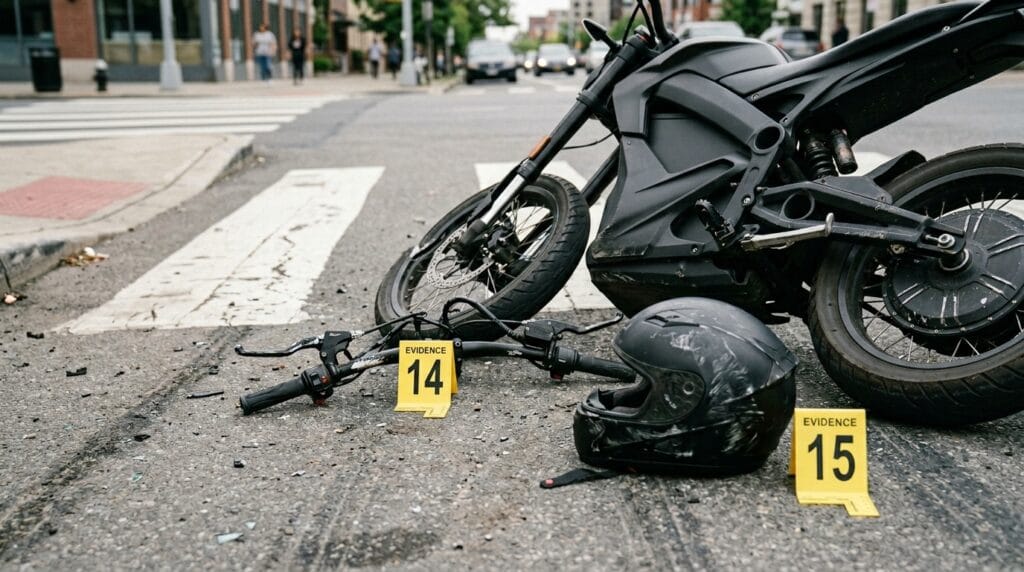
Many families use the word “e-bike” for almost every electric two-wheeled device. That can create legal confusion. A standard e-bike may fit into Class 1, Class 2, or Class 3. A high-powered electric motorcycle may not fit that system at all.
This distinction matters after a crash. If the device exceeds legal speed or power limits, an insurance company may argue the rider used an illegal vehicle. If the rider is a minor, the company may also question whether a parent or guardian allowed unsafe use.
That does not automatically end the injured person’s claim. It may actually expand the investigation. A pedestrian may have a claim against the rider, the owner, a parent, a seller, a repair shop, or another responsible party.
Speed And Weight Can Change The Injury Risk
A fast electric motorcycle can create more force than a standard bicycle. The rider may need more distance to stop. The device may also handle differently during turns, wheelies, sudden braking, or sidewalk riding.
Pedestrians can suffer broken bones, head injuries, hip injuries, back injuries, facial trauma, internal injuries, and emotional distress. Older adults face especially serious risks after a hard fall or direct impact.
Injury severity matters because medical costs can rise quickly. Emergency care, imaging, surgery, rehabilitation, assistive devices, and long-term care may all become part of the claim.
Location Can Shape The Liability Analysis
Where the crash happened matters. A collision near a school, crosswalk, park, sidewalk, or pedestrian path can raise different questions from a crash on a regular street. Investigators may review signs, lane markings, crosswalk visibility, lighting, camera coverage, and whether the rider should have expected pedestrians nearby.
If the crash happened near a school, your site’s guide on Orange County school zone accident claims in 2026 is a strong supporting resource. If the case involves a marked crosswalk or visibility issue, readers can also review pedestrian accidents in Orange County.
Parent Responsibility Can Become A Major Issue
Parent responsibility can become one of the biggest issues when a minor rider injures someone. A parent may face questions about permission, supervision, prior warnings, ownership, device storage, and knowledge of unsafe riding behavior.
In a civil injury claim, the question is not only whether the minor made a mistake. The claim may also ask whether an adult acted reasonably. The adult knew the device was too powerful? Did the adult know the child lacked legal permission to use it? Did the adult ignore dangerous riding habits?
These facts can affect insurance coverage and settlement pressure. A parent’s homeowner, renter, umbrella, or vehicle-related coverage may come under review. However, insurers may also deny coverage if they believe exclusions apply.
Your existing post on juvenile e-bike accidents in Orange County connects directly with this issue. It gives readers more background on minors, safety rules, and parent liability.
Prior Warnings Can Make A Case Stronger
Prior warnings can change the tone of a claim. If someone warned a rider or parent about unsafe use before the crash, that warning may become powerful evidence. It can show that the risk was not hidden or surprising.
Evidence may include police contacts, school complaints, neighbor reports, prior citations, text messages, social media posts, videos, and repair records. A pattern of unsafe riding can support the argument that the crash was preventable.
Families and injured pedestrians should preserve this information early. Witnesses may forget details. Posts may disappear. Video footage may get deleted. A strong claim often depends on gathering evidence before it vanishes.
How Victims Can Protect An E-Motorcycle Injury Claim

The first step after a serious crash is medical care. Pedestrians should not downplay pain after impact. Headaches, dizziness, back pain, hip pain, wrist pain, shoulder pain, and confusion can point to injuries that need prompt evaluation.
Medical records also help connect the injuries to the crash. Insurance companies often look for treatment gaps. A delay gives them room to argue the injuries came from another cause.
After medical care, evidence becomes the next priority. Take photos of the scene, the device, visible injuries, clothing, crosswalks, signs, skid marks, debris, and lighting conditions. Get witness names. Look for cameras from homes, schools, businesses, buses, vehicles, and traffic systems.
Preserve The Device, Digital Records, And Witness Evidence
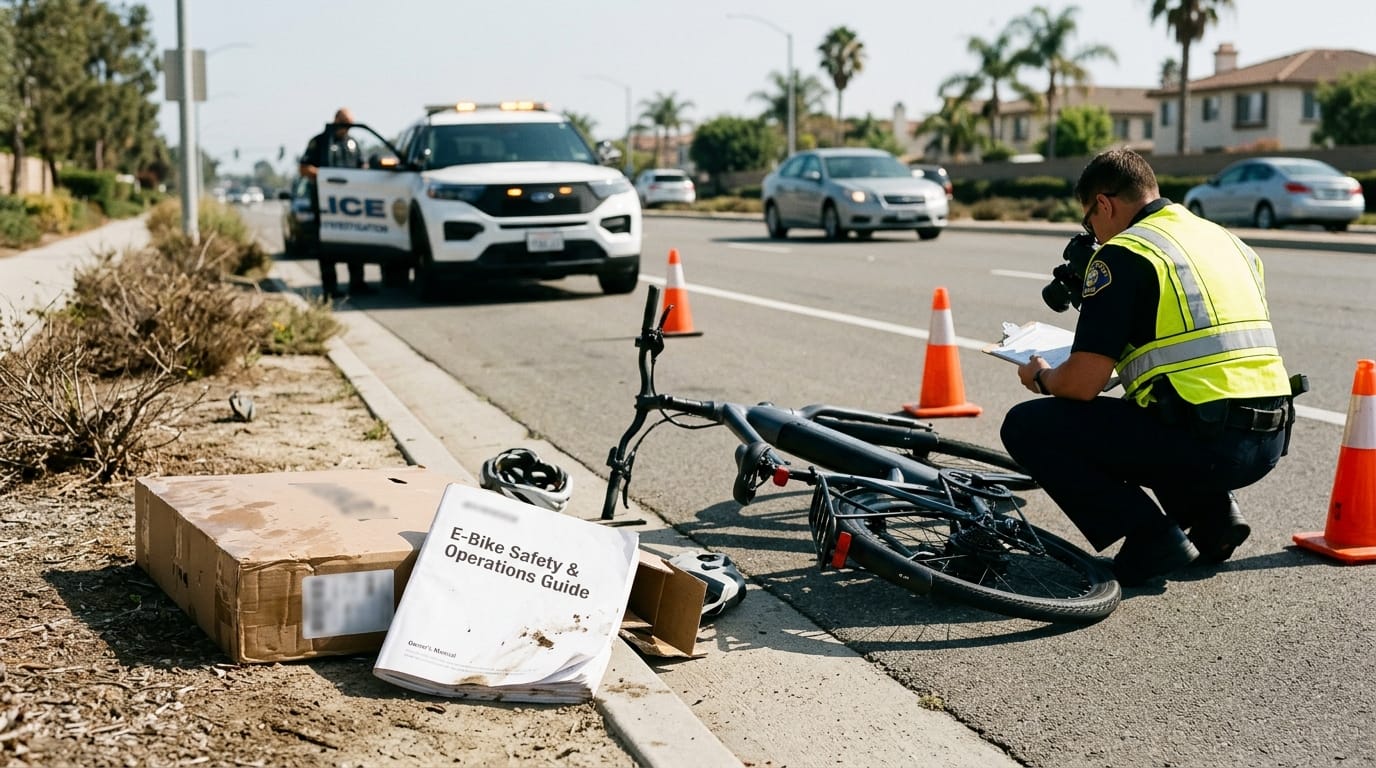
The electric device itself may become one of the most important pieces of evidence. Do not repair it, modify it, sell it, or throw away parts. Preserve the charger, battery, display, controller, tires, brakes, helmet, receipts, manuals, and online listing.
Digital evidence can also matter. Some devices or apps may show speed settings, ride history, GPS data, battery records, or modification settings. Social media videos may show past riding behavior. Messages may show who owned the device or who allowed the rider to use it.
If the device was modified, the claim may connect with your site’s article on Orange County modified e-bike accident claims in 2026. If a battery or charger defect caused a fire or failure, readers can also review lithium-ion battery fire injuries in Orange County.
Insurance calls require caution. An adjuster may ask questions before the victim knows the full facts. A simple statement like “I did not see him coming” can later become part of a blame argument. Injured pedestrians should avoid guessing about speed, distance, or fault.
Damages may include emergency treatment, hospital care, surgery, physical therapy, future medical care, lost income, reduced earning ability, pain and suffering, and emotional distress. Serious pedestrian crashes can also affect independence, sleep, mobility, and daily routines.
Orange County e-motorcycle injury claims 2026 need careful review because several parties may share responsibility. The rider may hold fault. A parent or owner may face questions. A seller or repair shop may matter. A defective part may add product liability. A dangerous road design may also contribute.
The bottom line is direct. High-powered electric devices are not harmless toys. When they hit pedestrians, the injuries can be life-changing. Victims should get medical care, preserve evidence, avoid rushed insurance statements, and review every possible source of liability before accepting blame or a quick settlement.