
An Orange County theme park injury claim can involve more than a simple accident report. A visitor may fall in a crowded walkway, get hurt on a ride, trip near a queue, suffer an injury during a show, or get struck by another guest. At first, the incident may seem like bad luck. However, the legal question is often more specific. Did unsafe conditions, poor maintenance, weak crowd control, missing warnings, or delayed response contribute to the injury?
This topic matters in 2026 because Orange County remains closely tied to theme parks, resorts, entertainment districts, hotels, parking structures, shuttle areas, restaurants, and tourist traffic. These places welcome large crowds every day. As a result, small hazards can become serious quickly.
A theme park injury can involve premises liability, ride safety rules, negligent maintenance, third-party conduct, security issues, or product-related questions. Therefore, injured visitors should not assume the case is simple. They should also avoid assuming that the first explanation from park staff or an insurance adjuster is the full story.
This article is for educational purposes only. It is not legal advice. Still, it can help visitors understand how an Orange County theme park injury claim may be reviewed, what evidence matters, and why fast documentation can make a major difference.
Why Theme Park and Resort Injury Claims Matter in Orange County
Theme parks are designed to feel controlled, clean, and safe. However, they are still complex environments. Thousands of people move through walkways, ride queues, restaurants, bathrooms, gift shops, parking areas, elevators, escalators, and shuttle zones. Meanwhile, employees must manage crowds, clean spills, operate equipment, respond to emergencies, and keep traffic flowing.
Because so many systems overlap, injury claims can become complicated. A fall may involve a wet floor, but it may also involve poor lighting or delayed cleanup. A ride-related injury may involve the ride itself, but it may also involve restraints, loading procedures, signage, staff instructions, or a guest’s medical condition. A parking-area injury may involve drivers, pedestrians, lighting, security, or dangerous pavement.
California’s Cal/OSHA Amusement Ride and Tramway Unit inspects and issues permits for temporary and permanent amusement rides. It also identifies required reporting rules for injury, accident, and major mechanical failure events. You can review the outside authority here: Cal/OSHA Amusement Ride and Tramway Unit.
Still, the existence of safety rules does not automatically prove a personal injury claim. A successful claim depends on the facts. The injured person must usually show what happened, why it happened, who may be responsible, and how the injury caused real harm.
Ride incidents are only one part of the risk
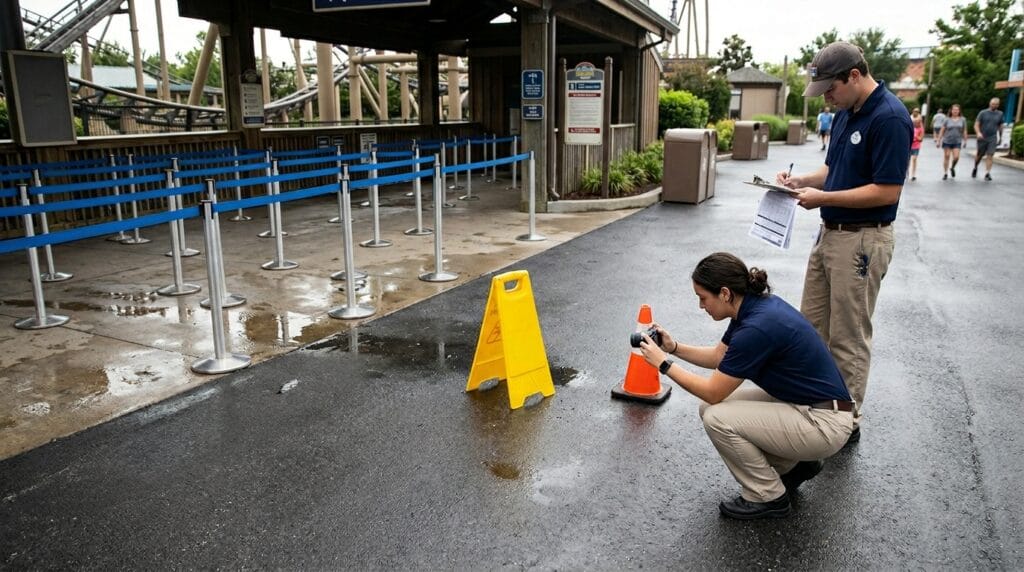
Many people think theme park injury cases are only about ride malfunctions. That is not accurate. Some claims may involve rides, but many involve ordinary premises hazards. These can include slick walkways, broken stairs, uneven pavement, loose mats, poor lighting, crowded queues, spilled drinks, malfunctioning gates, falling objects, or unsafe crowd flow.
In other words, a theme park can be both an entertainment venue and a property owner with safety responsibilities. If the park knew or should have known about a dangerous condition, liability may become an issue. The same is true for hotels, restaurants, shopping areas, parking structures, and transportation zones connected to the visitor experience.
This connects naturally with your site’s guide on slip and fall accidents in Orange County. Many theme park claims start with the same core question: did the property owner act reasonably to prevent harm?
California ride safety reporting can become part of the investigation
If the injury involved a ride, the investigation may need to look at more than the visitor’s actions. It may include inspection records, maintenance logs, operator training, restraint checks, prior complaints, incident reports, and whether the ride was operating as intended.
A ride incident does not always mean the ride was defective. However, it does mean the facts should be preserved. If a restraint failed, a gate opened unexpectedly, a vehicle stopped abruptly, or a guest was hurt during loading or unloading, records may matter.
Crowd, queue, and walkway hazards often create premises claims
Crowd-related injuries can happen when guests are rushed, compressed, redirected, or forced into narrow areas. Queue lines can also create risks if barriers are loose, flooring is wet, or staff fail to manage bottlenecks.
Walkways can be risky during rain, parade traffic, nighttime events, fireworks exits, restaurant rushes, and hotel check-in periods. Therefore, photos of the exact location can be powerful evidence. They can show lighting, surface condition, barriers, signs, and crowd density before the scene changes.
Evidence can disappear quickly after a theme park injury
Theme park evidence can disappear fast. Spills get cleaned. Barriers get moved. Employees change shifts. Surveillance footage may be overwritten. A ride may reopen. Witnesses may leave the park and return home to another city or state.
Because of that, injured visitors should document the scene as soon as it is safe. Take photos of the floor, ride area, queue, nearby signs, lighting, barriers, staff response, and anything that contributed to the injury. Also photograph visible injuries, torn clothing, damaged shoes, broken glasses, or other physical evidence.
Digital evidence may also matter. Phones, smartwatches, photos, videos, ride apps, location data, and messages can help show where someone was and when the incident occurred. Your site’s guide on AI evidence and smart devices in Orange County personal injury cases is a useful related resource for this issue.
Photos, witness names, and medical records should be preserved early
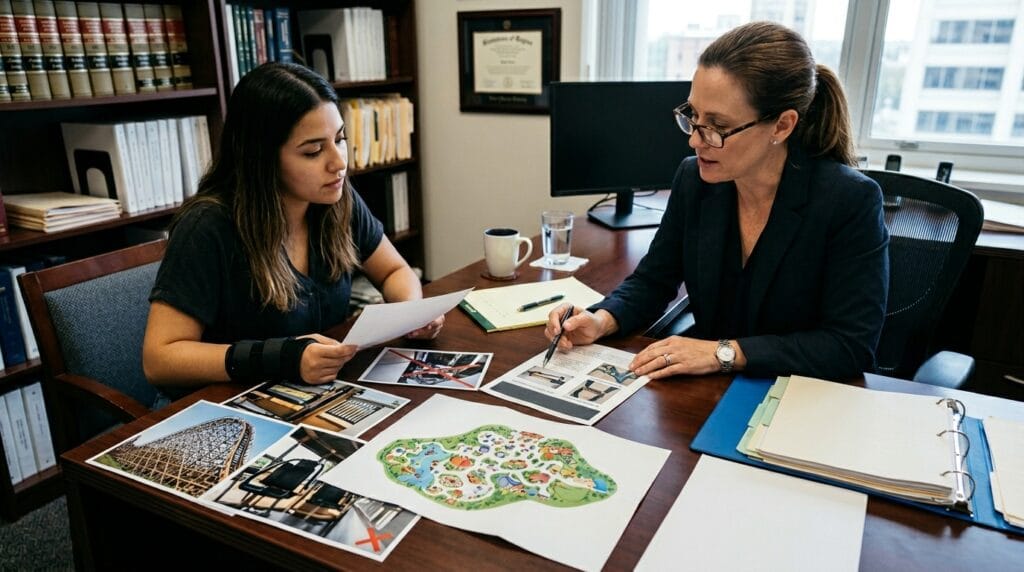
Witness names can be just as important as photos. A nearby guest may have seen a spill before the fall. Another person may have heard staff mention a prior complaint. A ride passenger may have noticed a restraint problem. A restaurant worker may know how long a hazard was present.
Medical records matter too. Do not wait days to get checked if you have head pain, neck pain, back pain, dizziness, numbness, swelling, or trouble walking. Delayed treatment gives insurers room to argue the injury was minor or unrelated. For broader claim steps, read how to file a personal injury claim in Orange County.
How Orange County Visitors Can Protect an Injury Claim
After a theme park injury, the first step is medical care. Then report the incident to park staff and ask for a copy or reference number if possible. Keep the report factual. Avoid guessing about fault. Also avoid saying you are “fine” if symptoms are still developing.
Next, save everything connected to the visit. This may include tickets, receipts, parking records, hotel documents, app screenshots, photos, video clips, wristbands, shoes, clothing, and messages. These details can help establish timing and location.
Be careful with insurance calls. A claims representative may sound helpful, but their job is not to build your case. They may ask broad questions before you know the full injury diagnosis. Keep your answers accurate and avoid speculation.
If the injury happened near a crosswalk, parking lot, shuttle stop, or resort roadway, vehicle and pedestrian evidence may also matter. Your site’s guide on pedestrian accidents in Orange County may help readers understand visibility, scene evidence, and fault disputes.
Liability may involve more than one party
Theme park claims may involve the park operator, a hotel, restaurant, maintenance company, security contractor, ride manufacturer, equipment vendor, shuttle operator, or another guest. The right party depends on the facts.
For example, a restaurant spill may involve cleaning procedures. A ride injury may involve maintenance or operator conduct. A parking-lot injury may involve lighting and security. A crowd injury may involve event planning or staff response. Therefore, the investigation should not stop after one incident report.
Damages may include emergency care, hospital bills, surgery, physical therapy, lost income, future medical care, pain and suffering, and emotional distress. If the injury causes anxiety, sleep problems, fear of crowds, or trauma symptoms, your site’s guide on emotional distress damages in Orange County personal injury cases may be helpful.
Do not assume the first incident report tells the full story
An incident report is useful, but it may be incomplete. It may not include every witness, every photo, every camera angle, or every maintenance record. It may also describe the injury in limited terms before symptoms become fully known.
In the end, an Orange County theme park injury claim depends on evidence. A busy park can change the scene quickly, so injured visitors should act early. Get medical care, report the incident, save photos, identify witnesses, preserve digital records, and avoid rushed statements.
Theme parks are meant to be fun, but large entertainment properties still have safety responsibilities. When a preventable hazard causes harm, the injured person deserves a careful review of what happened. The stronger the evidence, the harder it becomes for an insurer or responsible party to dismiss the claim as just an unfortunate accident.