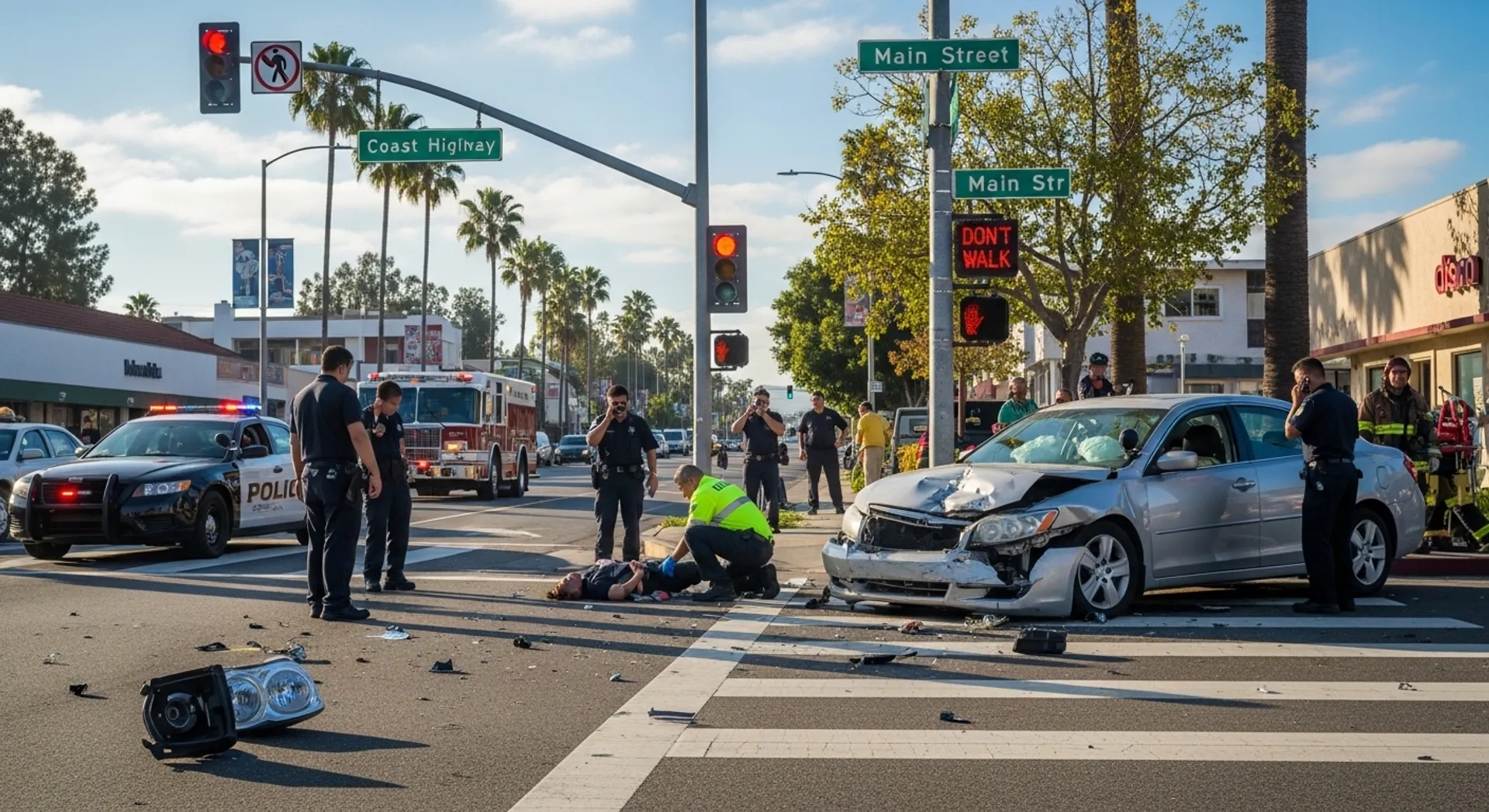
Pedestrian accidents in Orange County can change a life in seconds. A person walking through a crosswalk, crossing near a school, heading to a bus stop, or moving through a parking lot may have little protection when a driver turns too fast, looks down at a phone, or fails to see what should have been obvious. When that happens, the legal case is not only about the impact itself. It is also about visibility, right-of-way, roadway design, and whether the driver acted with reasonable care.
That is why this topic matters so much in 2026. California has placed more attention on visibility near crosswalks, and that shift matters in injury claims. When a crash happens near a blocked corner, a right turn, or a marked or unmarked crosswalk, the question is no longer just “Who hit whom?” The better question is, “What conditions made this crash possible, and what evidence shows the driver should have avoided it?”
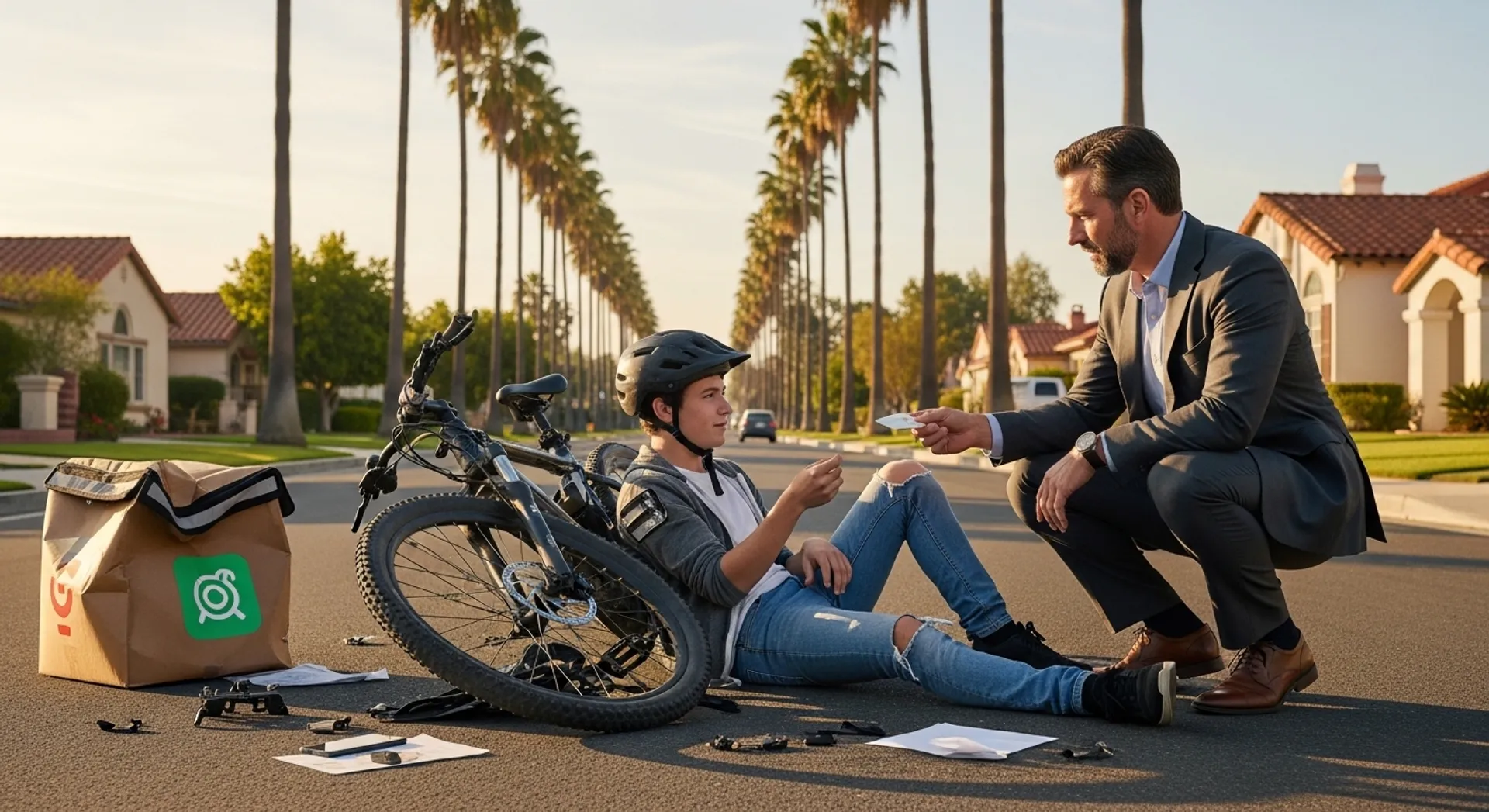
This post fits naturally into your existing content. If you are dealing with an injury case right now, it also helps to review car accident resources, personal injury guides, and this Orange County e-bike and e-scooter liability article, since many pedestrian cases overlap with the same evidence and negligence issues.
Why pedestrian accidents in Orange County deserve more attention
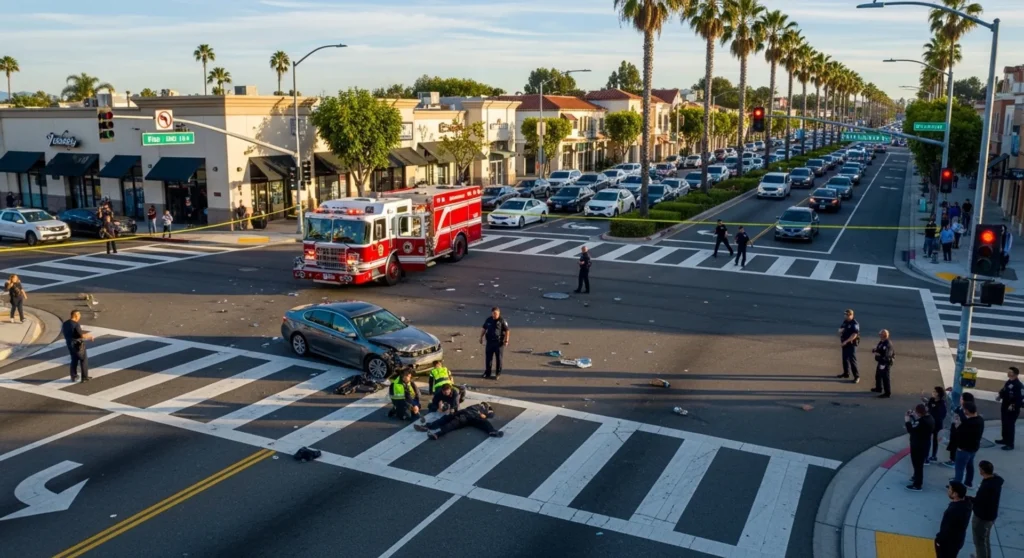
Orange County has busy commercial streets, beach communities, school zones, shopping centers, mixed-use neighborhoods, and high-turnover traffic near restaurants, medical offices, and tourist areas. That combination creates regular conflict points between people walking and people driving. Even a low-speed impact can cause fractures, head trauma, knee injuries, spinal damage, or long recovery periods.
Pedestrian claims are also harder than some people expect. Insurance companies often try to shift blame onto the person who was hit. They may argue the pedestrian crossed too late, was outside a marked crosswalk, wore dark clothing, or “appeared suddenly.” That is why these cases often depend on more than a basic crash report. Good claims are built with visibility evidence, witness accounts, vehicle position, camera footage, and strong medical documentation.
How California’s daylighting rule can matter in an injury claim
California’s daylighting rule is aimed at one basic safety problem: parked vehicles too close to intersections and crosswalks can block sight lines for both drivers and pedestrians. When visibility is cut off, drivers may roll into a turn or acceleration path before they have a clear view. Pedestrians may step out expecting to be seen when, in reality, they are hidden by a large SUV, van, truck, or tightly parked row of vehicles.
In a personal injury case, that matters because blocked visibility is not just a traffic design issue. It can become evidence. If a crash happened near a crosswalk where visibility was compromised, that fact may help explain how the collision happened and whether the driver approached the area carefully enough.
That does not mean every pedestrian automatically wins because a crosswalk was partly blocked. It means the scene itself matters. The angle of the turn, the position of parked cars, the speed of the vehicle, and the pedestrian’s path all become more important when visibility is part of the story.
Marked crosswalks are not the only places where these cases happen
Many drivers still think pedestrians only have meaningful rights inside painted lines. That is too simplistic. Crosswalk issues often involve:
- marked intersections,
- unmarked crosswalks at intersections,
- right turns on green or red,
- left turns across traffic,
- parking-lot exits and entrances,
- school zones and drop-off areas,
- driveways near sidewalks or corner access points.
Drivers are expected to watch for people walking, not just other vehicles. That is especially true near intersections, bus stops, shopping centers, and mixed pedestrian-traffic areas. When a driver says, “I never saw them,” that statement does not necessarily help the defense. Sometimes it only raises a bigger question: why didn’t they see what they should have seen?
Common causes of pedestrian accidents in Orange County
Unsafe turns at intersections
One of the biggest patterns in pedestrian crashes is the turning vehicle. Drivers focus on traffic gaps, oncoming cars, or making the light, then fail to notice a person already crossing with the signal or entering the crosswalk legally.
Distracted driving
Phones, navigation screens, music controls, delivery apps, and in-car displays all create moments of inattention. A driver who looks away for even a second may miss a pedestrian directly ahead.
Poor visibility near parked vehicles
Parked cars too close to a corner can make pedestrians harder to see and can make drivers overconfident about entering a turn before they actually have a clear line of sight.
Speeding and rolling turns
Some crashes happen because the driver does not fully stop, takes a corner too fast, or treats the crosswalk as an afterthought. A few extra miles per hour can reduce reaction time and increase injury severity.
Hit-and-run behavior
Pedestrian cases become even more difficult when the driver leaves the scene. In those situations, speed and preservation of evidence become even more important.
What evidence can strengthen a pedestrian injury claim?

Pedestrian accidents in Orange County are often won through evidence quality, not just sympathy. The most useful evidence may include:
- Scene photos: intersection layout, parked vehicles, skid marks, crosswalk markings, curb ramps, traffic lights, and lighting conditions.
- Video footage: dashcams, nearby businesses, doorbell cameras, city traffic cameras, and parking-lot surveillance.
- Witness statements: neutral observers can confirm whether the pedestrian had the signal, whether the driver rolled through the turn, or whether visibility was blocked.
- Vehicle data: in some serious cases, speed, braking, and impact timing may matter.
- Medical records: your treatment timeline helps prove both the severity of the injuries and the connection to the crash.
This is one reason your site’s existing focus on digital evidence remains useful. Camera footage and smart-device evidence often matter just as much in pedestrian cases as they do in standard vehicle collisions.
What to do after a pedestrian crash
- Call 911 and get medical attention. Even injuries that seem manageable at first can worsen fast.
- Photograph the area before conditions change. Focus on vehicle position, crosswalk markings, traffic controls, and anything blocking visibility.
- Get witness names and contact details. People leave quickly, and their memory fades.
- Look for cameras immediately. Businesses and homes may overwrite footage in a short time.
- Do not minimize your symptoms. What feels like “just soreness” can turn into a longer medical issue.
- Be careful with insurance statements. Keep your description factual and avoid guessing.
- Talk to a lawyer early. Evidence preservation is often the difference between a vague claim and a strong one.
Can the pedestrian still recover if they were partly at fault?
Sometimes yes. California’s comparative negligence rules can still allow recovery even if the pedestrian is found partly responsible. But the value of the case may be reduced by that percentage of fault. That is one more reason not to assume the insurance company’s first version of events is accurate. In pedestrian claims, the first story is often incomplete.
For example, the defense may say the pedestrian crossed outside the ideal location. But if the driver was distracted, speeding, or turning without checking the crosswalk area, liability may still remain substantial. Real cases often involve multiple contributing facts at once.
What compensation may be available?
A pedestrian injury claim may include damages for emergency care, hospital bills, surgery, follow-up treatment, physical therapy, lost wages, reduced future earning ability, pain and suffering, and emotional distress. Severe pedestrian crashes can also lead to long-term rehabilitation, mobility limitations, and permanent changes in daily life.
That is why these claims should never be judged only by property damage. In a pedestrian case, the human cost is often far greater than anything visible at the scene.
Final thoughts
Pedestrian accidents in Orange County are not simple “walk versus car” cases. They are visibility cases, timing cases, evidence cases, and negligence cases. California’s newer crosswalk-visibility rules matter because they sharpen the focus on what drivers should be able to see and how carefully they should approach intersections.
If you or a family member was hit while walking, do not treat the crosswalk layout or blocked-corner visibility as minor details. Those facts may end up shaping the entire claim. Get medical care, preserve the scene, secure any available video, and move fast before the evidence disappears.