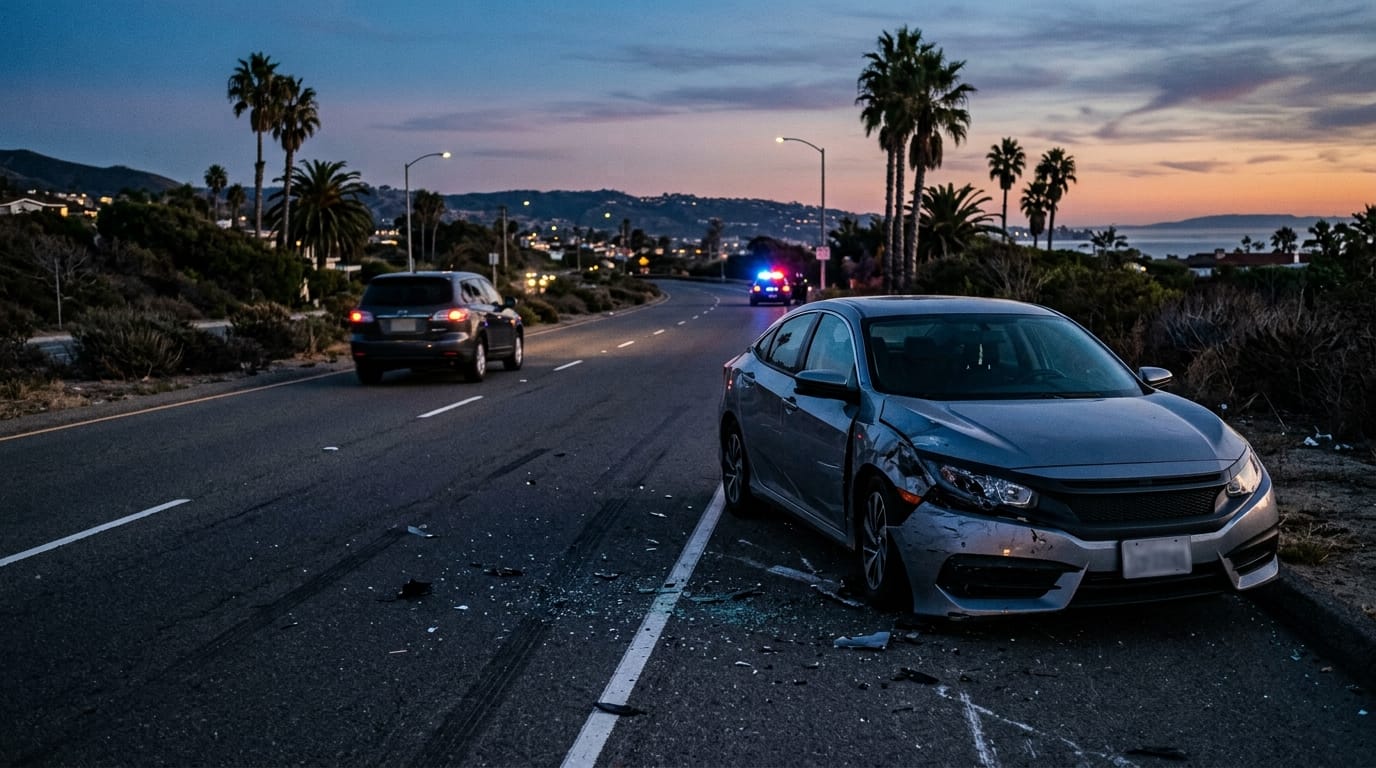
A serious DUI crash in Orange County can leave victims dealing with trauma, medical bills, lost income, and a long recovery. In many cases, the first legal question is obvious: what can be done against the drunk driver? But that is not always the only question that matters. Sometimes the more important issue is whether another person helped create the situation that led to the crash.
That is where Orange County social host liability 2026 becomes a meaningful topic. California generally protects social hosts from liability for serving alcohol. But there is a narrow and important exception involving underage drinking at a residence. If a parent, guardian, or another adult knowingly furnished alcohol to someone under 21 at a home, and that underage person later caused injury or death because of intoxication, the host may also become part of the legal case.
This matters in Orange County because underage drinking incidents can overlap with house parties, graduation parties, beach-area gatherings, birthday celebrations, and other social events where adults may assume they are only “supervising” or “keeping things safe.” In reality, those facts can create legal exposure if an underage guest leaves intoxicated and causes a crash.
If your site wants a strong local content angle that connects car accidents, premises-related negligence, and injury-claim strategy, this is a good one. It also works naturally beside your existing articles on pedestrian accidents in Orange County, juvenile e-bike accidents in Orange County, and broader personal injury claim resources.
What Social Host Liability Means in California
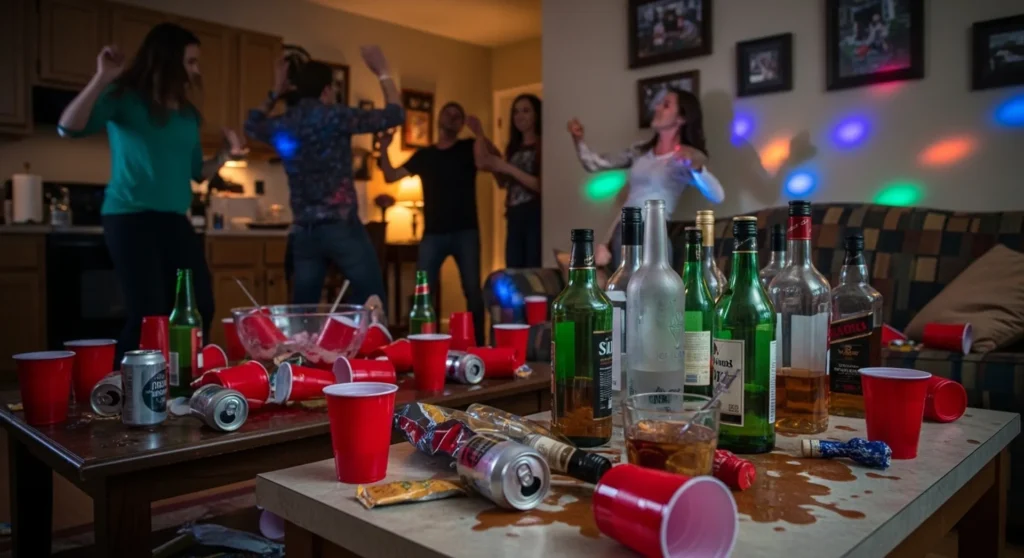
California is not one of those states where any party host can automatically be sued after a drunk-driving crash. That part matters because people often misunderstand “dram shop” or “social host” law and assume anyone who provided alcohol can be held responsible. In California, the rule is narrower than that.
As a general matter, California law treats the consumption of alcohol, not the furnishing of it, as the proximate cause of resulting injuries. That means adult social hosts usually have broad protection from civil liability when they serve alcohol to other adults. But the law does not stop there. There is a separate path for claims involving underage drinking at a residence.
The underage exception is the part that changes everything
The key exception applies when a parent, guardian, or another adult knowingly furnishes alcohol at their residence to a person under 21 years old. In that situation, if the underage person later causes injuries or death because of intoxication, the host may face civil liability. That is the part many people miss. A host does not need to be running a bar or selling alcohol for legal exposure to become real.
In practice, that means an injury case may expand beyond the drunk driver. The investigation may also focus on what happened before the crash, where the alcohol came from, who provided it, whether adults knew minors were drinking, and what steps were or were not taken before the underage guest got behind the wheel.
Why this is not just a DUI case
Once social-host liability is in the picture, the case becomes more than a basic drunk-driving collision. It can turn into a layered negligence investigation involving the driver, the host, insurance coverage, witness accounts, party evidence, social media, digital communications, and homeowner-related facts.
That matters because a seriously injured person may need more than one source of recovery. In a severe crash, the underage driver may have limited assets and limited auto insurance. If another legally responsible party exists, that can make a major difference in the practical value of the claim.
How Orange County Social Host Liability 2026 Claims Are Built
These cases are won or lost on proof. It is not enough to say a minor attended a party and later caused a crash. The real issue is whether there is evidence that an adult knowingly furnished alcohol at the residence to that underage person. That factual point matters more than assumption, rumor, or anger after the collision.
Because of that, early investigation is a big deal. House-party evidence disappears fast. Bottles get thrown away. text threads get deleted. security footage gets overwritten. witnesses start changing what they remember. The longer the delay, the harder it can become to build a clean story of what happened before the crash.
Evidence that can matter in these cases
Strong cases often depend on ordinary details that people overlook in the first few days. Photos and videos from the party can matter. So can text messages, invitations, ride coordination messages, Venmo or payment records, Ring camera footage, neighbor statements, and social media posts showing who was there and what was happening.
Witness testimony can also be critical. A friend who saw adults supplying alcohol, a neighbor who observed underage guests arriving and leaving, or a rideshare driver who picked up partygoers may each provide pieces of the timeline. In some cases, the host’s own statements after the crash become important too.
Why the timing of the investigation matters
One reason Orange County social host liability 2026 claims are tricky is that the key proof often exists outside the police report. The crash report may establish DUI, fault, and injuries, but it may say very little about the house party itself. That means the plaintiff side often has to do the harder work of connecting the party to the crash through evidence gathered quickly and carefully.
This is one place where your site can naturally link back to car accident resources and to your broader article on how to file a personal injury claim in Orange County. The same core lesson applies: the earlier the evidence is preserved, the stronger the claim usually becomes.
What Victims Should Do After a Crash Linked to an Underage Party

If there is any reason to believe the crash started at a house party or other gathering involving minors, do not treat that detail like gossip. It may be central to the case. Preserve the facts early and assume the digital trail may not last long.
Get medical treatment and preserve the usual crash evidence
Start with the basics. Get immediate medical care. Follow through with treatment. Take photos of your injuries and the damage. Keep every bill, diagnosis, prescription record, imaging result, and discharge summary. Save the police report number and any information about the driver’s arrest or DUI investigation.
None of that proves social-host liability by itself, but it proves the damage side of the case. Without strong damages evidence, even a well-developed liability theory can lose force. This also makes a natural internal-link point to your personal injury content on emotional harm, claim value, and compensation strategy.
Preserve party-related evidence before it disappears
If you learn the driver came from a party, write down every known detail while it is fresh. Name of the residence. approximate time. who mentioned it. who was there. any screenshots. any social media stories. any photos showing the driver drinking. If someone tells you, “His parents were home,” or “Everyone knew minors were drinking there,” that does not prove the case, but it tells you where to investigate next.
In many cases, the party evidence matters just as much as the crash evidence. A destroyed bumper proves impact. A saved group chat may help prove how the intoxication began and where legal responsibility may expand.
Do not assume the insurance picture is simple
These claims can involve multiple policies and multiple defenses. The driver may have auto coverage. The household may have homeowners or umbrella coverage questions. Liability may be denied aggressively. The host may claim they never furnished anything, were not home, did not know the guest was under 21, or did not know alcohol was present at all.
That is why these cases need to be framed carefully. A weakly investigated social-host allegation can go nowhere. A well-supported one can change the entire value and direction of the case.
Common Defense Arguments in Social Host Cases
Hosts and insurers rarely concede these claims easily. One common defense is simple denial: “No alcohol was provided by the adults.” Another is lack of knowledge: “We did not know the guest was under 21.” A third is factual separation: “The driver drank somewhere else after leaving the house.”
There may also be arguments over whether the residence requirement is satisfied, whether the adult actually furnished the alcohol, and whether the intoxication from that event was a substantial factor in causing the later crash. Each of those points turns on evidence, not assumption.
This is another reason the article complements your site’s newer posts so well. Your recent Orange County content already leans into visibility, comparative fault, family responsibility, and evidence-driven claims. Social-host litigation fits that same approach, just with a different factual setting.
Final Thoughts
Orange County social host liability 2026 is not an everyday injury claim, but it is a very real one. California does not make all party hosts liable for drunk-driving injuries. But when an adult knowingly furnishes alcohol at home to someone under 21, and that underage person later injures someone because of intoxication, the legal analysis changes fast.
For injured victims, that can matter a lot. It may uncover another responsible party, another path to compensation, and a fuller explanation of how the crash happened in the first place. The key is speed. Preserve the crash evidence, preserve the party evidence, document the medical harm, and evaluate the case before the digital trail goes cold.
For official legal background, see California Civil Code § 1714. For current California impaired-driving safety context, see the California Office of Traffic Safety alcohol-impaired driving page.